
How to Remove a 1‑Star Review on Amazon (What Actually Works)
A single 1‑star review can crush your traffic, slow your sales, and stall your listing’s momentum. This post breaks down what actually qualifies for Amazon review removal, how to identify real policy violations, why most DIY review appeals fail, and the structured approach sellers need to successfully remove false or damaging reviews.
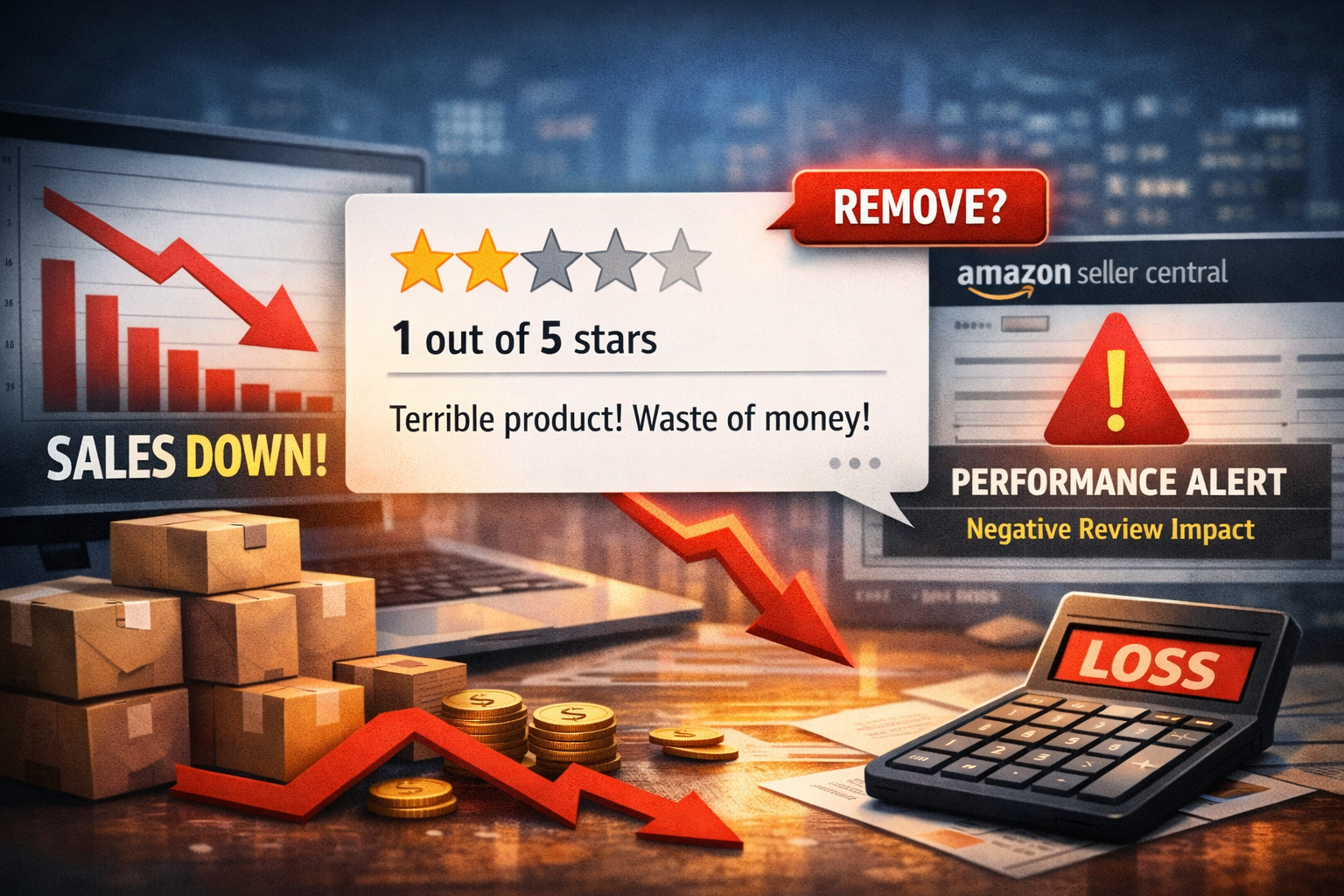


How to Remove a 1‑Star Review on Amazon (What Actually Works )
By Steve Pickering — Founder, EcomSteve.com
A single 1‑star review can crush your traffic, slow your sales, and stall your listing’s momentum overnight. Even if you have a lot of 5‑star reviews — that one red mark at the top of your listing changes everything.
And here’s the truth most sellers never hear:
Amazon doesn’t remove reviews because they’re unfair. Amazon removes reviews because they violate policy — and because the case is structured correctly.
That’s the difference between sellers who stay stuck and sellers who get results.
What Amazon Really Looks For in Review Removal
Amazon’s review team is trained to evaluate policy, not fairness. So even if a review is false, misleading, or intentionally damaging, Amazon won’t remove it unless it breaks a specific rule.
Reviews are eligible for removal when they violate Amazon’s Community Guidelines, including:
- Policy‑violating content
- Reviews about shipping, packaging, or fulfillment
- Offensive or abusive language
- Competitor mentions or pricing commentary
- Promotional content or external links
A review from a non‑verified buyer can be removed — but only if it also violates a guideline. Non‑verified alone is not enough.
The #1 Mistake Sellers Make
Most sellers submit emotional requests like:
“This review is false and hurting my business.”
Amazon ignores these instantly.
Why?
Because Amazon doesn’t evaluate emotion — they evaluate evidence and policy alignment.
The correct approach is structured, factual, and aligned with Amazon’s internal logic.
What Actually Works: The Review Removal Framework
After 14 years of managing my own brands and helping thousands of sellers, here’s the framework that consistently gets results:
- Identify the exact policy violation
- Present a structured removal request
- Provide supporting evidence when needed
- Escalate correctly if frontline support denies it
This is where most sellers fail — not because the review is valid, but because the case is weak.
Why Most DIY Review Appeals Fail
Amazon’s review enforcement is inconsistent, and the appeal language matters more than sellers realize. Using the wrong phrasing can:
- lock your case
- trigger repeated denials
- make Amazon believe the review is legitimate
- reduce your chances of escalation success
This is why I never publish the exact sentences I use. The same line that wins one case can lose another if the context is wrong.
If you’re searching for “how to remove a 1‑star review on Amazon”, the real answer is:
You need a policy‑based argument, not a template.
The Hidden Truth About False Reviews
Amazon does not verify whether a review is true. They verify whether it violates a rule.
That means:
- A completely false review can stay live.
- A true review can be removed if it violates policy.
This is why sellers get confused — and why expert‑level strategy matters.
Final Thoughts
A single 1‑star review doesn’t have to define your product. But ignoring it definitely will.
If you’re dealing with a false, damaging, or policy‑violating review, there is a path forward — it just requires the right structure, the right evidence, and the right escalation strategy.
— Steve Pickering
Founder, EcomSteve.com




What I provide is experienced guidance to help you approach the reinstatement process strategically and avoid the common mistakes that often delay or prevent recovery.
My goal is to help you present the strongest possible case so you have the best chance of getting your account back online.