
Amazon Safety Complaints: Why Listings Get Flagged — And How Sellers Can Fix Them
Amazon is removing more listings than ever for vague or inaccurate safety complaints — often without warning and often when the product is completely safe. This post breaks down why Amazon flags listings, the most common triggers behind safety‑related deactivations, and the exact steps sellers should take to fix a safety complaint without making the situation worse. You’ll learn how to identify the root cause, what documentation Amazon actually wants, how to write a clean safety‑complaint appeal, and when it’s time to bring in expert help. If your listing was flagged for a safety issue or you want to strengthen your compliance workflow, you can reach me directly through my contact form.
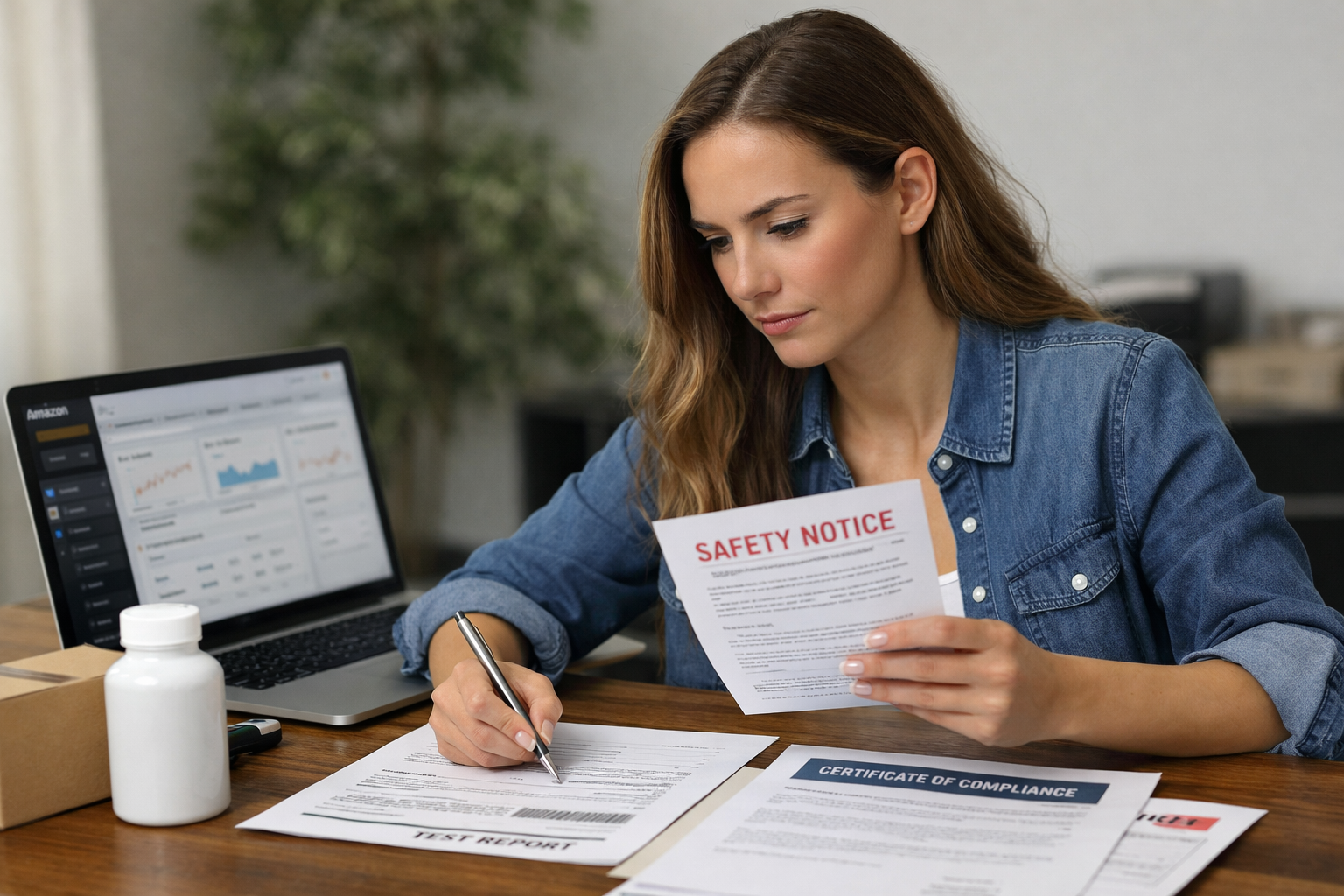


Amazon Safety Complaints in 2026: Why Listings Get Flagged — And How Sellers Can Fix Them
If you sell on Amazon long enough, you’ll eventually face one of the most confusing and frustrating issues on the platform:
“Your listing has been removed due to a product safety complaint.”
In 2026, Amazon safety complaints have become one of the top reasons listings get deactivated — often without warning, without detail, and without any actual safety issue.
This guide breaks down why Amazon flags listings, what triggers a safety complaint deactivation, and how sellers can fix a safety complaint the right way without making the situation worse.
Why Amazon Safety Complaints Are Increasing in 2026
Amazon’s compliance and risk teams have tightened enforcement across every category. The platform is under pressure from:
- Consumer safety regulators
- Product liability lawsuits
- Marketplace oversight laws
- Internal risk‑reduction initiatives
As a result, Amazon now auto‑flags listings based on:
- Customer wording in reviews
- Buyer messages
- Returns comments
- Automated risk signals
- Competitor abuse
- Internal safety algorithms
This means even a single vague comment like “didn’t feel safe” can trigger a listing flagged for safety issue.
The Most Common Reasons Listings Get Flagged for Safety
Here are the top triggers I see in 2026:
1. Customer complaints (even if inaccurate)
Buyers often misuse terms like:
- “dangerous”
- “defective”
- “unsafe”
- “hazardous”
Amazon’s bots don’t interpret context — they react.
2. Competitor abuse
Bad actors file fake safety complaints to knock listings offline. This is a growing issue in:
- Supplements
- Electronics
- Baby products
- Home & kitchen
3. Missing or outdated documentation
Amazon may request:
- Safety data sheets
- Compliance certificates
- Lab test reports
- Material breakdowns
- Product manuals
If you can’t provide them quickly, your listing stays down.
4. Product category risk level
High‑risk categories get flagged more often, even for minor issues.
The Biggest Mistake Sellers Make After a Safety Complaint
When sellers get the dreaded email, they often panic and send:
- Long explanations
- Emotional responses
- Technical arguments
- Blame toward customers
- Defensive language
This almost always leads to:
“Your appeal has been rejected.”
Amazon doesn’t want emotion. They want clarity, documentation, and corrective actions.
How to Fix an Amazon Safety Complaint (The Right Way)
If you’re searching for how to fix Amazon safety complaint 2026, here’s the exact framework that works.
1. Identify the root cause
Even if Amazon doesn’t tell you the exact complaint, look for:
- Recent negative reviews
- Buyer messages
- Return comments
- Product changes
- Packaging issues
You need a plausible, factual root cause — not guesses.
2. Address the issue directly
Amazon wants to see:
- What happened
- Why it happened
- What you did to fix it
- How you’ll prevent it
This is the core of a strong Amazon safety complaint appeal.
3. Provide clean, relevant documentation
Depending on your category, Amazon may request:
- Certificates of Conformity
- Lab test results
- SDS (Safety Data Sheets)
- Product photos
- Updated instructions
- Packaging improvements
Attach only what is relevant — not a document dump.
4. Write a short, professional appeal
A strong appeal includes:
- A factual root cause
- Corrective actions already taken
- Preventive actions moving forward
- Supporting documentation
- A request for reinstatement
Avoid:
- Blaming customers
- Blaming Amazon
- Technical jargon
- Long explanations
Short, clean, factual wins.
What About False Safety Complaints?
Many sellers face Amazon safety complaint false positive situations — especially when:
- The product is safe
- The complaint is vague
- The issue is clearly user error
- Competitors are attacking
In these cases, your appeal should:
- Clarify the misunderstanding
- Provide documentation proving safety
- Show preventive steps (even if the product is fine)
Amazon wants to see that you take safety seriously — even when the complaint is invalid.
How to Prevent Future Safety Complaints
Here’s what I recommend to every seller:
- Add clear instructions to packaging
- Improve product inserts
- Add safety warnings where appropriate
- Use higher‑quality product photos
- Add a troubleshooting section to your listing
- Monitor reviews weekly
- Respond to buyer messages quickly
Small improvements dramatically reduce safety flags.
When You Should Not Appeal Alone
You should get expert help when:
- You’ve already had multiple appeals rejected
- Amazon is asking for documents you don’t understand
- You’re in a high‑risk category
- You’re unsure what root cause to use
- You’re dealing with competitor abuse
- You’ve been hit with multiple safety flags
At that point, you’re not just dealing with a safety complaint — you’re dealing with appeal history, and Amazon reads every word you’ve already sent.
The EcomSteve Takeaway
If your listing was deactivated for a safety issue, here’s what you need to remember:
- Safety complaints are increasing in 2026
- Many are false positives
- Amazon’s bots over‑flag to protect the platform
- Your appeal must be short, factual, and documentation‑driven
- You need a clear root cause, corrective actions, and preventive actions
- Don’t guess, don’t over‑explain, and don’t send emotional appeals
Your listing can be reinstated — but only if you approach the appeal the right way.
If you’re dealing with a suspension or you want to tighten your compliance workflow, you can reach me directly through my contact form.




What I provide is experienced guidance to help you approach the reinstatement process strategically and avoid the common mistakes that often delay or prevent recovery.
My goal is to help you present the strongest possible case so you have the best chance of getting your account back online.